After a Dry 2026, a Second Look at Irrigated Horse Acreage Around Sheridan
On Monday, May 18, ranchers and landowners from the Tongue River watershed filled The Hub on Smith in Sheridan to hear from David Schroeder, superintendent of Water Division II for the Wyoming State Engineer's Office. The Sheridan Press captioned its photos from that night with a plain summary: landowners were facing the worst irrigation season in decades.
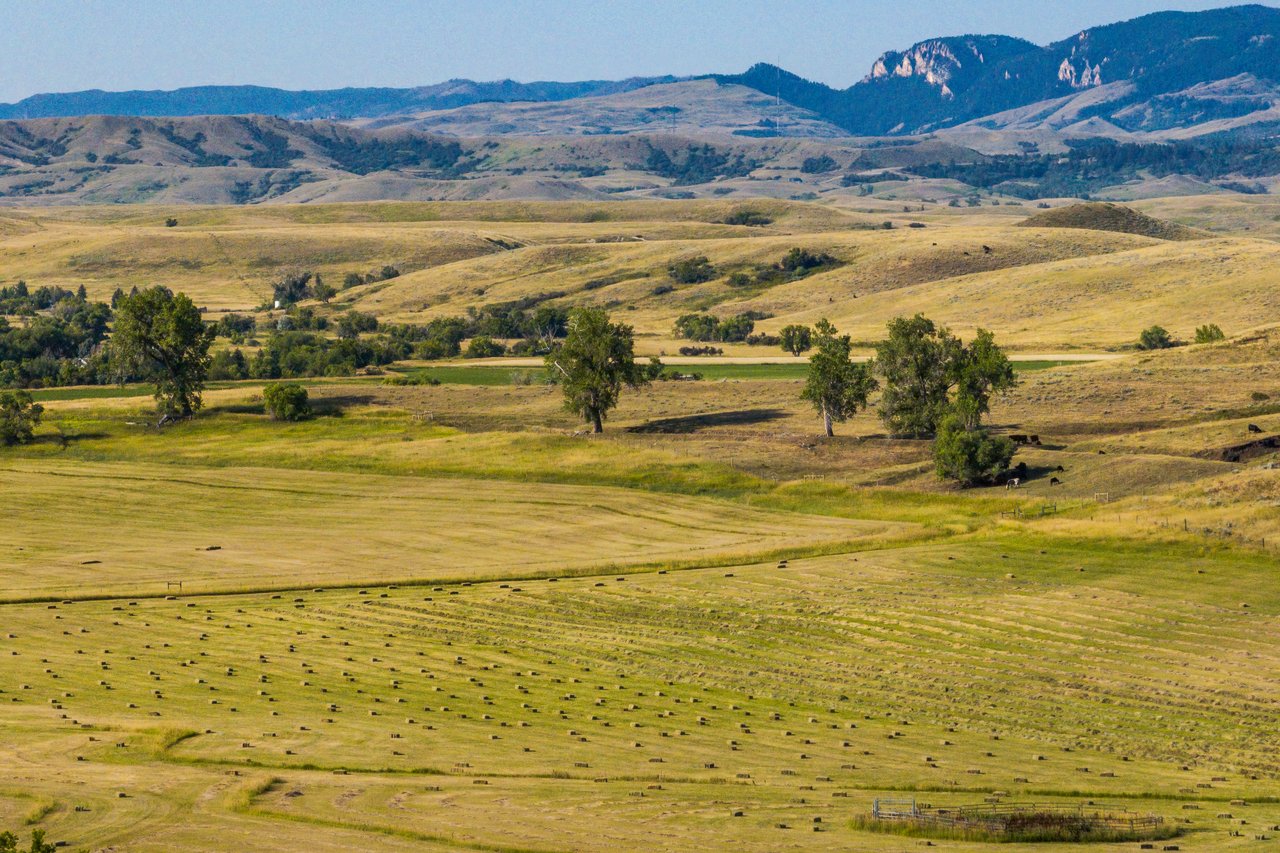
Six months later, that season is a useful record for anyone shopping for horse acreage around Big Horn, Story, Banner, Dayton or Ranchester. A listing can say "irrigated" about two properties whose water behaved very differently this year. Around Sheridan, the price of irrigated ground should follow how much water the creek and reservoir behind its ditch can deliver in a year like 2026. The acreage figure in the listing doesn't tell you that.
The trouble started with snow that never came. On May 5, 2026, Montana placed a call on the Tongue River to fill Tongue River Reservoir across the state line, and the Wyoming State Engineer's Office announced it on May 8, citing drought over the past year and historically low winter snowpack and streamflow in the basin.
Montana lifted the call on July 24, after both states agreed the reservoir could no longer fill that water year because streamflows had dropped too far. The same release reported that stream regulation was then in effect on Little Goose Creek and Big Goose Creek, generally upstream of the City of Sheridan.
Those dates mark the summer the creeks ran low. Little Goose and Big Goose feed the country around Big Horn and the south side of Sheridan. The Tongue reaches Dayton and Ranchester. Around Story, the ditch described below draws from North and South creeks. A dry year shows up on each of those creeks at its own pace, so it shows up on each property's pasture at its own pace too.
The dry year is still showing up now, in storage. The Sheridan Community Land Trust publishes a monthly Sheridan County Water Supply Report that pulls streamflow, snowpack, drought and reservoir data into one place for people making ranch and land decisions. SCLT started the report in 2022 after a community survey, according to Wyoming Public Media.
The November 2026 report shows where the mountain reservoirs stand going into winter, next to the April 2026 report from the start of the season.
Reservoir | April 2026 report | November 2026 report |
|---|---|---|
Bighorn | not listed above | 404 of 4,624 acre-feet, 8.7% |
Park Lake | 4,328 acre-feet, 41.8% | 2,975 acre-feet, 28.7% |
Dome Lake No. 1 | 1,354 acre-feet, 89.9% | 519 acre-feet, 34.5% |
Cross Creek | 207 acre-feet, 25.1% | 76 acre-feet, 9.2% |
Kearney Lake | not listed above | 2,932 acre-feet, 46.4% |
Sawmill | not listed above | 253 acre-feet, 19.8% |
Lake DeSmet | 198,299 acre-feet, 84.39% | 182,625 acre-feet, 77.1% |
The same November report says most of Sheridan County moved from Moderate to Severe Drought over the past month, and NOAA's outlook calls for no change in the month ahead. Snow water equivalent in the Tongue basin was about half an inch, below normal for the time of year, and precipitation since the water year reset on October 1 was 2 inches, also below normal. On the Drought.gov page for Sheridan County, January through October 2026 was the fifth-driest year-to-date stretch in 132 years, 5.88 inches below normal.
For a buyer, a low reservoir in November means the property starts next season behind. A ditch company that leans on storage begins spring with whatever carried over plus whatever the coming snowpack adds, and the snowpack is starting from below normal.
This is where local knowledge separates two "irrigated" listings. Around Sheridan, irrigation water usually reaches a property through a ditch company, and each company draws from a particular creek and sometimes from particular reservoirs. The Wyoming Water Development Commission's 2019 irrigation systems survey is several years old, but it shows how these supplies connect.
The survey lists the Spring Draw Ditch Company as drawing from Little Goose Creek, with its storage in the Big Horn and Park reservoirs. Both reservoirs are on the November table above, at 8.7% and 28.7%. Little Goose is one of the two creeks the State Engineer's Office reported under regulation in late July. The survey also lists continuing maintenance and subdivision as operating issues for Spring Draw. That matters to anyone looking at a ranchette carved from a larger ranch, because a ditch built to serve a few big fields ends up serving many small owners.
Story has its own system. The survey lists the Piney and Cruse Creek Ditch Company as drawing from North and South creeks, and it notes a diversion-drop improvement in Story and deliveries to subdivided lands. Sheridan County's special-district budget listing includes the Piney & Cruse Creek Ditch Company Irrigation District. The same survey lists Meade Creek Ditch as drawing from Piney Creek, and the Big Goose and Beaver Ditch Company from the East Fork of Big Goose Creek.
So when a property near Big Horn and another near Story are both described as "irrigated pasture," the useful questions are about water. Which ditch company delivers it? Which creek feeds that ditch, and which reservoir, if any, backs it up? How did that system do between May and September of this year? The seller and the ditch company can answer those questions, and the answers turn one word on a listing into a picture of real water. Questions about the water right itself belong with a water-rights attorney or specialist, and our post on how to evaluate water rights when purchasing rural land is a place to start.
Water matters this much on a horse property because of hay. Every ton your own ground doesn't grow or graze is a ton you buy.
The USDA Wyoming Direct Hay Report for the week ending November 13, 2026, shows good to premium alfalfa in 3x4 large squares at $330 a ton in the East region and $300 a ton in the West region, FOB farm or ranch. West-region small squares averaged $342.50 a ton that week, with a range of $335 to $350. The report describes prices as steady and fall demand as good for both large and small squares. Classified ads show a lower end of the market. A November 5 ad in the Wyoming Livestock Roundup offered 700 tons of irrigated first- and second-cutting alfalfa in round bales at $200 a ton, without giving the seller's location. Freight to your own stackyard comes on top of that.
Small squares are what many horse owners stack, and they ran over $340 a ton this November. At that price, the difference between irrigated pasture that stays green into August and pasture that browns in June shows up on your feed bill every year. That is why the ditch questions above are pricing questions. A buyer comparing two listings around Sheridan is partly comparing how many tons of hay each property will make them buy in a short year. These are published prices from mid-November 2026. Treat them as general information, not financial advice, and confirm current costs with your own suppliers and advisors before you budget around them.
The year also turned up a local example of land holding water when little was coming down the creek. In an August 31 story, the Sheridan Community Land Trust described water still moving through a wet meadow on South Dry Creek, where SCLT, the Wyoming Game and Fish Department and landowners John and Vanessa Buyok are restoring wetland and riparian habitat along 3,280 feet of creek. The crews are using 32 wicker weirs or one-rock dams, eight hardened livestock crossings and two woody debris gully treatments. "In a year this dry, South Dry Creek really shows the value of these wet places," SCLT's John Graves told the land trust.
Horse owners can apply the same lesson when they walk a property. A low meadow, a creek bottom or a sub-irrigated corner can keep producing forage after the ditch goes quiet. Those spots belong in your evaluation next to the ditch shares and the hay barn, and they deserve a closer look on any Sheridan-area property you visit in a year like this one.
Shopping in late November has one advantage. The 2026 season is fresh, sellers remember how their ditch ran, and the SCLT report shows each reservoir's storage heading into winter. Ask how many weeks the property had ditch water this year, when it stopped, how the hay or pasture yield compared with a normal year, and whether the owner had to buy hay. Then compare the answers across properties in Big Horn, Story and the Tongue River country around Dayton and Ranchester. Listings there can look alike while their water came from different sources this year. Our Sheridan area page and buyer resources are a good starting point, and owners thinking about selling irrigated ground can see how we present water and pasture on our sellers page.
At Premier Horse Property, we look at barns, pasture and irrigation along with the house. If you want help comparing irrigated acreage around Big Horn, Story or Dayton after a year like 2026, take a look at our horse properties and give us a call.
Your dream property deserves the right team. Whether you're searching for a private equestrian estate, working ranch, hobby farm, or the perfect place to enjoy life with your horses, our experienced team is here to guide you every step of the way.
PREMIER HORSE PROPERTY
3590 Lewis Rd Riverton, WY 82501